Pulse Position Modulation
Pulse Position Modulation (PPM) is an analog modulating scheme in which the amplitude and width of the pulses are kept constant, while the position of each pulse, with reference to the position of a reference pulse varies according to the instantaneous sampled value of the message signal.
The transmitter has to send synchronizing pulses (or simply sync pulses) to keep the transmitter and receiver in synchronism. These sync pulses help maintain the position of the pulses. The following figures explain the Pulse Position Modulation.
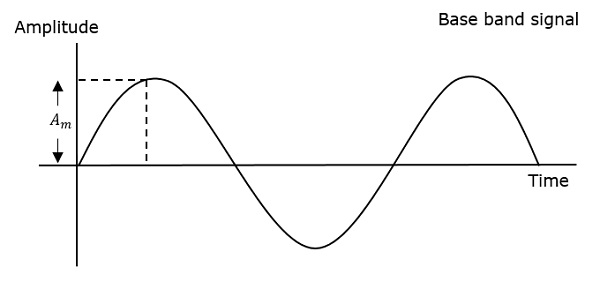
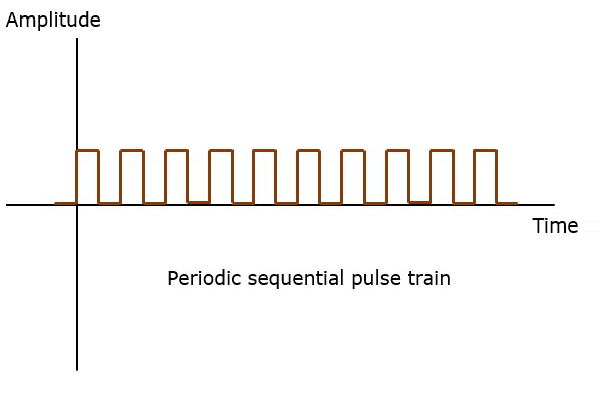
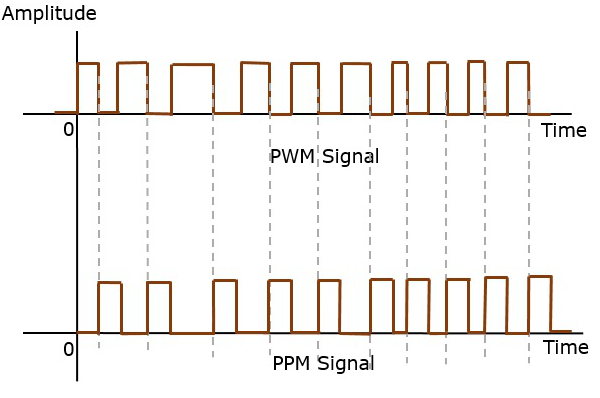
Pulse position modulation is done in accordance with the pulse width modulated signal. Each trailing of the pulse width modulated signal becomes the starting point for pulses in PPM signal. Hence, the position of these pulses is proportional to the width of the PWM pulses.
Advantage
As the amplitude and width are constant, the power handled is also constant.
Disadvantage
The synchronization between transmitter and receiver is a must.
Reference:

No comments:
Post a Comment